
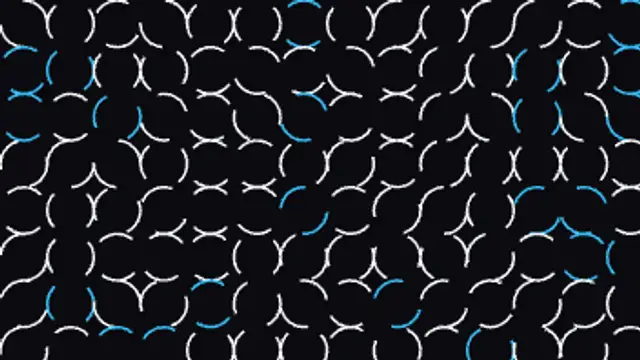
Quarter-circle arcs sit at a random turn in every cell of the grid, and each tile rocks a quarter turn on its own beat so the paths keep rewiring.
Tiled and tessellated pattern loops built from real geometry, not filters.
Quarter-circle arcs sit at a random turn in every cell of the grid, and each tile rocks a quarter turn on its own beat so the paths keep rewiring.
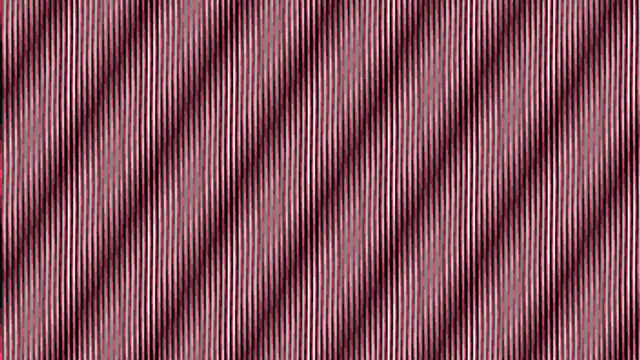
Two line grids of slightly different pitch sit over one another and one rocks a couple of degrees, so wide interference bands sweep across the frame.
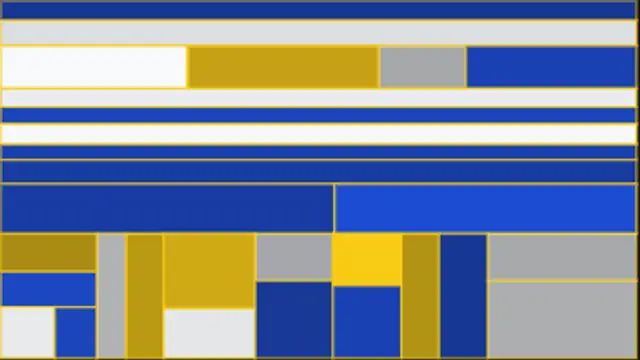
The frame halves itself again and again into unequal rectangles, then every panel breathes at its own rate against the grid it belongs to.

Circles drop in at every size that will still fit without touching, filling the frame, then each one pulses gently against its neighbours.
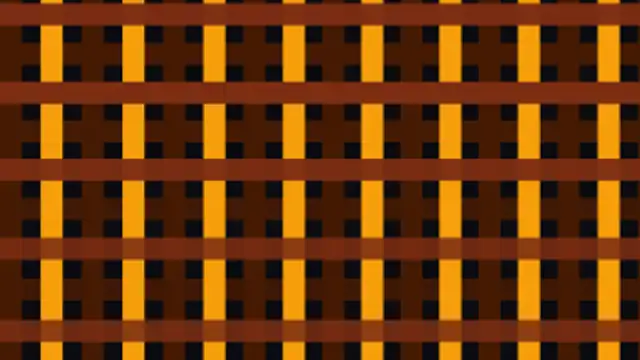
Warp and weft ribbons cross in a true over-and-under weave, and every strip slides a little against the cloth so the basket keeps shifting.
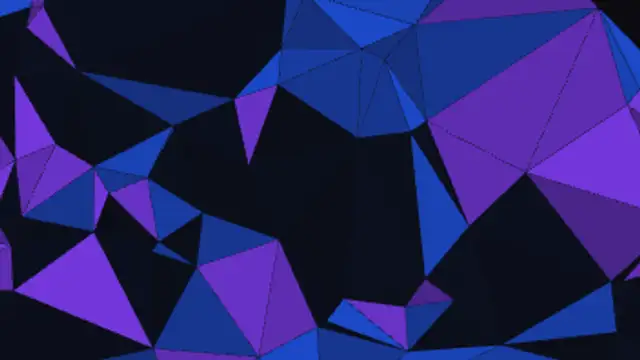
Points drift on slow orbits and the frame retriangulates around them every frame, so the whole low-poly mesh keeps rebuilding itself.
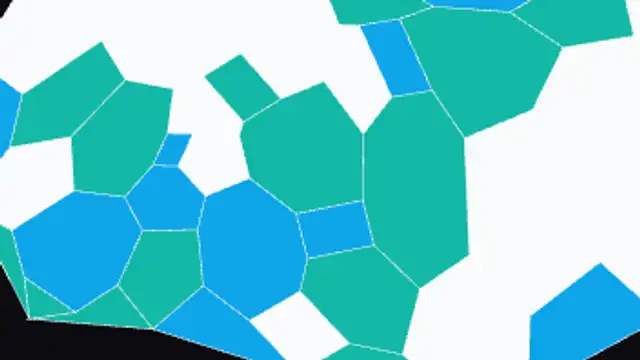
Each drifting seed claims the ground closest to it, so the cell walls slide and stretch as the points move past one another.

Several wave fronts sum into a rolling height field, and marching squares traces a clean isoline at every level as the landscape moves under them.
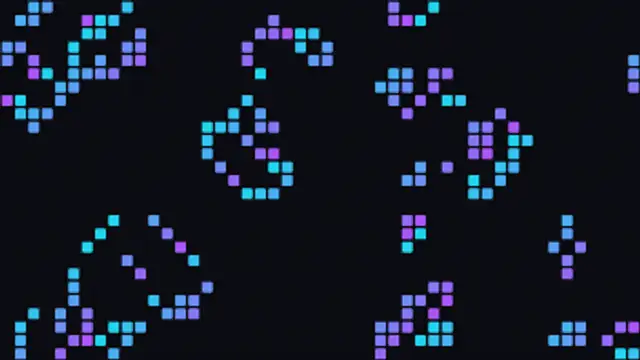
A seeded board runs the neighbour rules forward generation by generation, then plays the whole run backwards so the loop closes exactly.
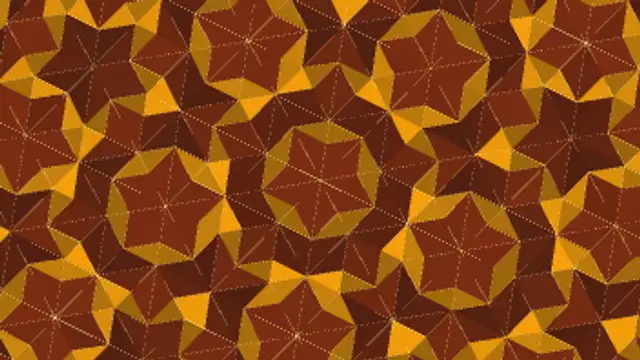
Thin and thick rhombs subdivide at the golden ratio into a pattern that never repeats, then breathe in slow waves across the tiling.

A print screen of dots swells and shrinks as a seeded noise field drifts underneath, so the whole surface breathes without a single dot leaving its cell.
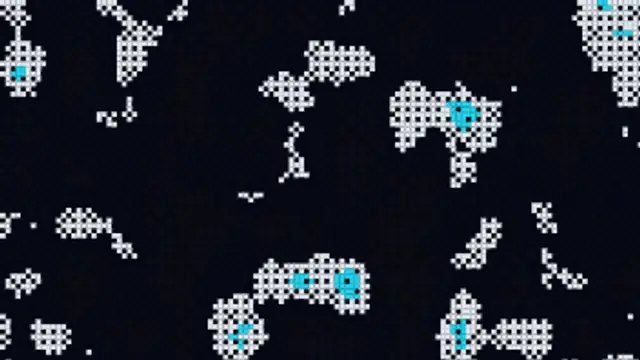
A Bayer threshold matrix turns a drifting noise field into hard one-bit pixels, so gradients break into the crosshatched grain of an old display.
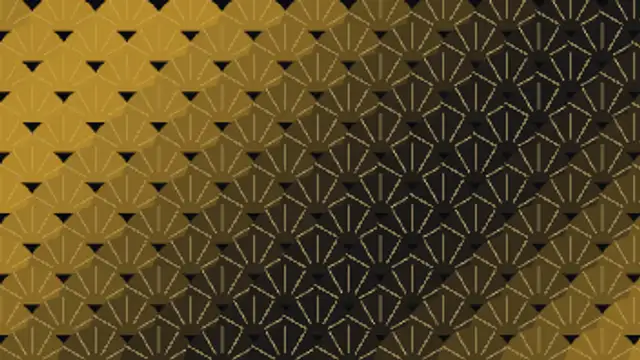
Overlapping shell fans lie in offset courses with rays struck across each one, and a diagonal wave lifts them course by course like a gilded ceiling.
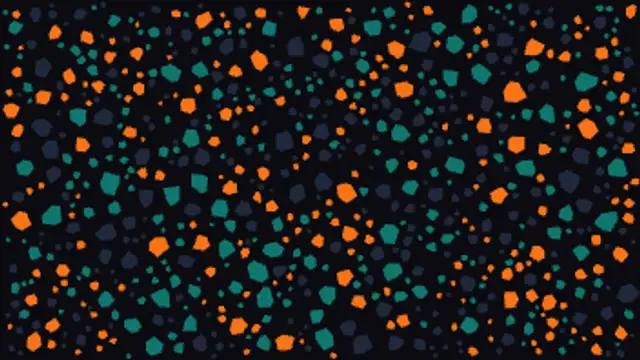
Irregular stone chips of every size pack the slab without ever touching, and each one drifts a hair on its own orbit so the floor never sits quite still.
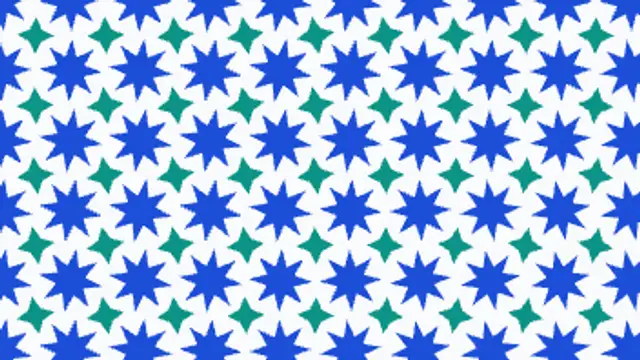
Eight-pointed stars and the small crosses that lock between them fill the wall, each tile turning against its neighbour as a slow wave crosses the glaze.
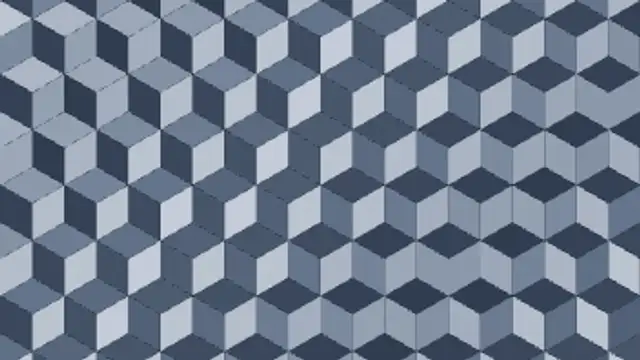
Sixty-degree rhombs meet three to a point so the flat plane reads as stacked cubes, and the light turns around each block until up and down swap places.
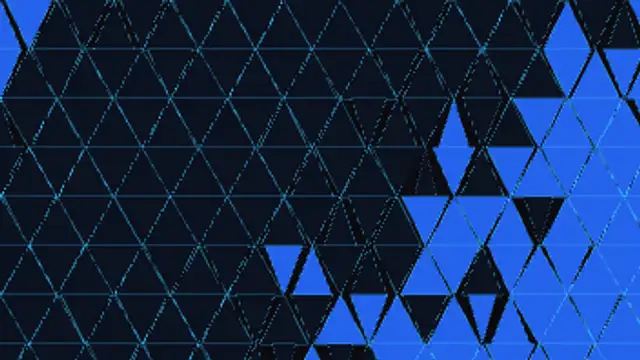
A triangular grid where every tile turns edge-on and comes back showing its other face, the flips running across the frame on a staggered diagonal.
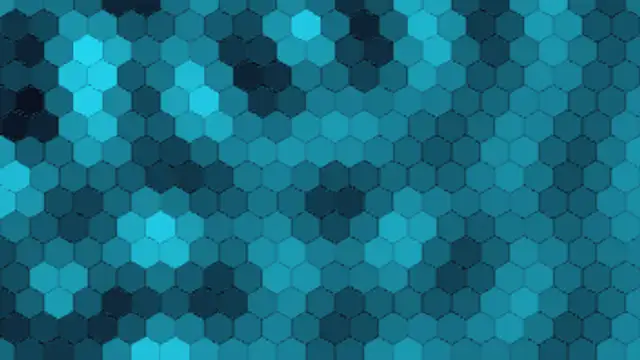
Four seeded sources send rings out across a hex grid, and where the rings meet the cells brighten and swell against the interference they make together.
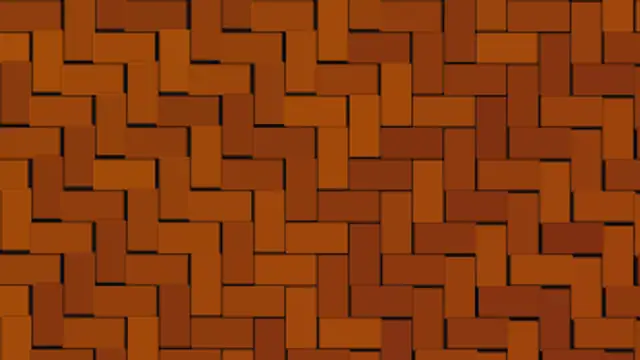
Planks lean alternately left and right into a herringbone floor, and each one slides a little along its own grain as a wave crosses the room.
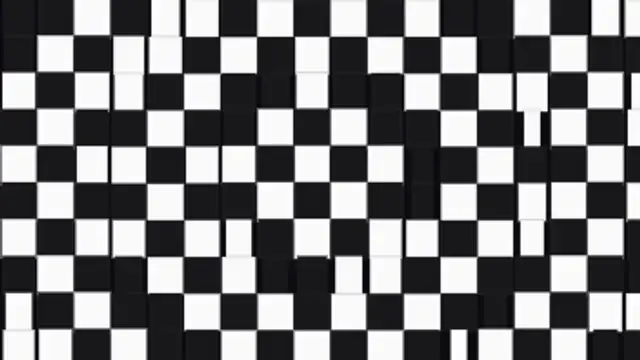
Rings spread from the middle of a checkerboard and every square they reach turns edge-on and comes back the other colour, like a wall of flip-dots.
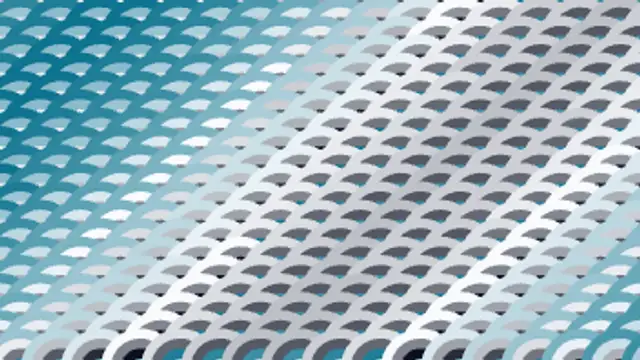
Nested domes overlap in offset courses the way roof scales do, and the colour bands inside each shell travel outward as a swell crosses the rows.
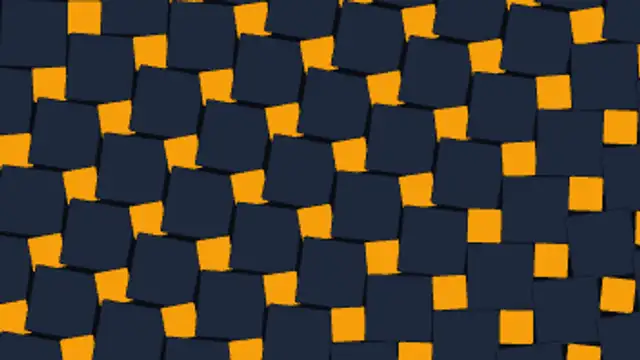
Two sizes of square lock together in the old pinwheel proof, and every tile turns a little against its neighbour without the fit ever breaking.
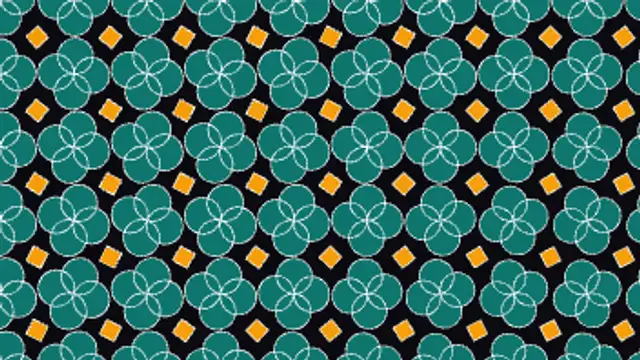
Four-lobed clovers sit on a square lattice with small diamonds in the gaps, the two turning against each other as a slow wave crosses the screen.

Squiggles, crosses, triangles and dots scatter across a loose grid in eighties colours, every piece bobbing and turning on a beat of its own.
Flat bands of stripe run edge to edge until an invisible lens moves under them, bowing the lines out into a dome and back through a pinched waist.
Interlaced straps run out from every star and meet their neighbours edge to edge, the whole lattice drawing itself in on a wave and easing back out.
Leaded panes of coloured glass sit in a hand-pulled grid, and a band of daylight travels across the window lifting each pane as it passes.
A seeded sett of stripes runs both ways across the cloth and the crossings darken where warp meets weft, exactly as real tartan does.
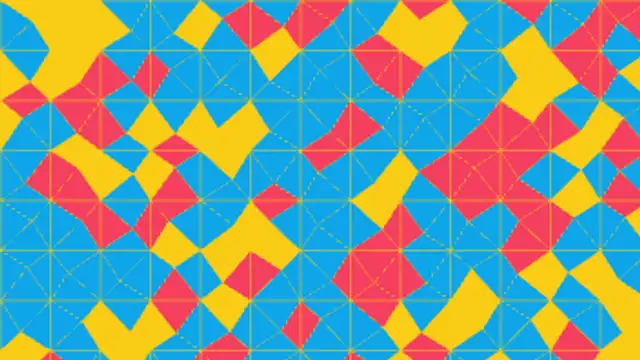
Every square is quartered into four coloured wedges and no tile may sit beside one whose edge colour differs, so the whole field agrees while its hubs drift.
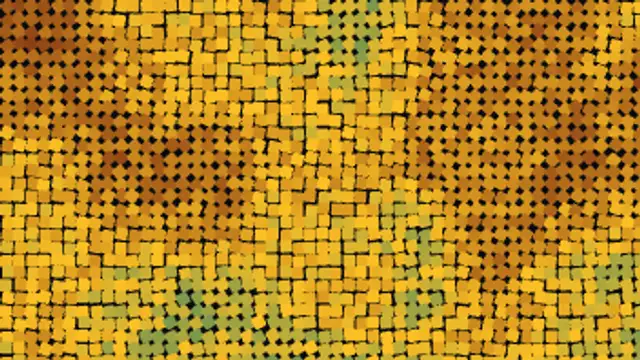
Small square tesserae are set shoulder to shoulder and each turns to follow the flow line running under it, the way a mosaicist lays andamento.
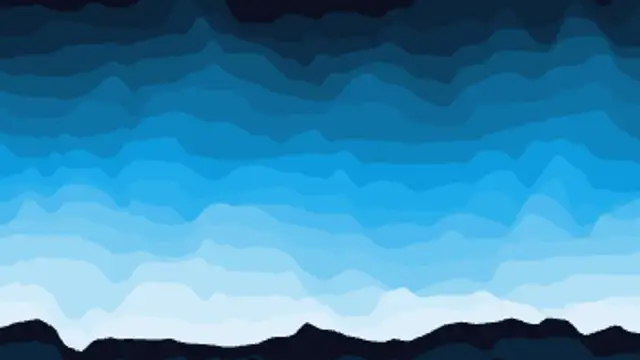
Flat bands of colour are pushed sideways by a noise field that feeds on itself, pulling the edges into the veined drift of marbled paper.
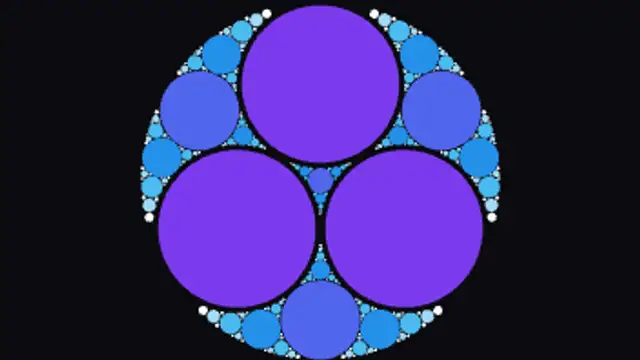
Every gap between three touching circles is filled by the one circle that touches all three, over and over, until the whole disc is packed to the grain.
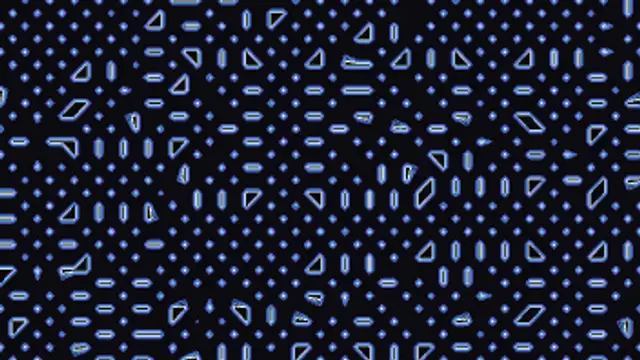
Two chemicals chase each other across a grid until they settle into the spots and mazes Turing predicted, then the run plays back to close the loop.
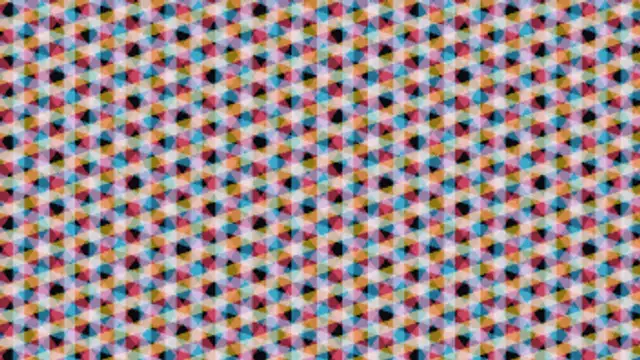
Five line gratings laid at even angles over one another interfere into a rosette that never repeats, each grating sliding at its own rate.
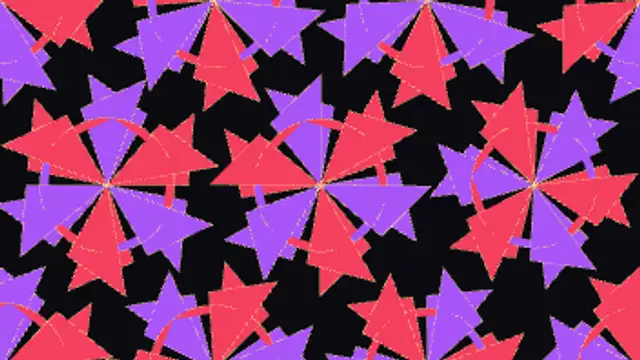
One wedge of pattern is mirrored and turned around its centre twelve times, and those rosettes sit on a hex lattice so the symmetry runs off every edge.
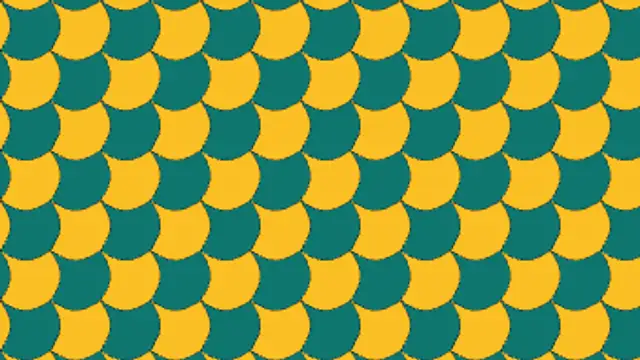
A plain checkerboard grows bulges on every edge and swallows the matching notch of its neighbour, so the squares become interlocking figures and flatten back.
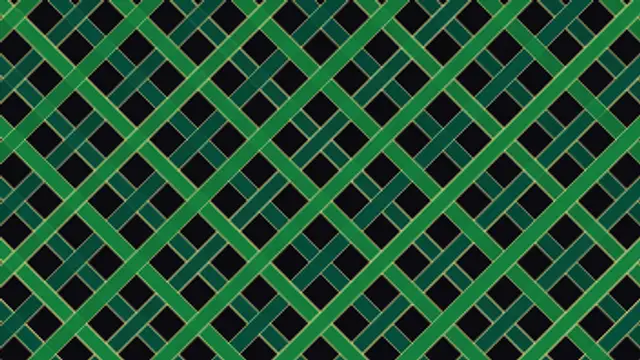
Two families of cord cross the frame on the diagonal, alternating course by course so one set rides over the other the way knotwork is drawn.
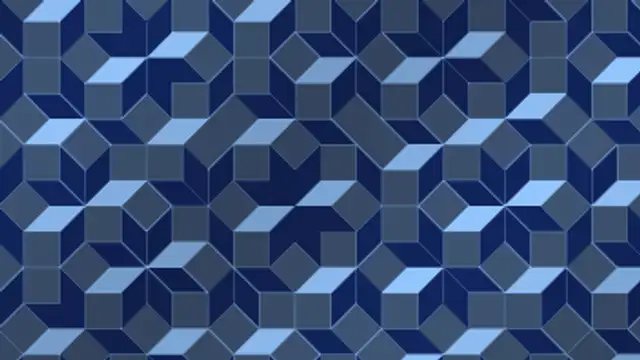
Four line grids at even angles are cut into squares and thin rhombs, giving an eight-fold tiling that never repeats however far it runs.
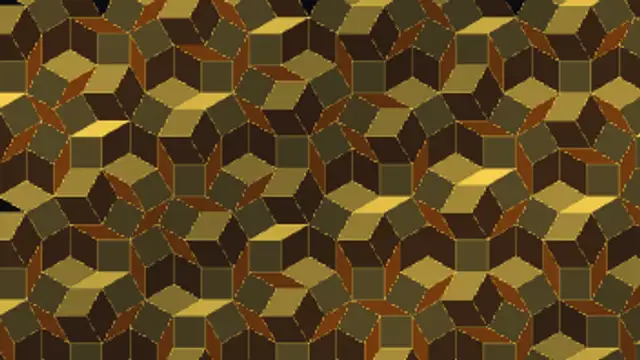
Six line grids meet at thirty degrees and their cells fall out as three rhombus shapes, building the twelve-fold rosettes of a dodecagonal quasicrystal.
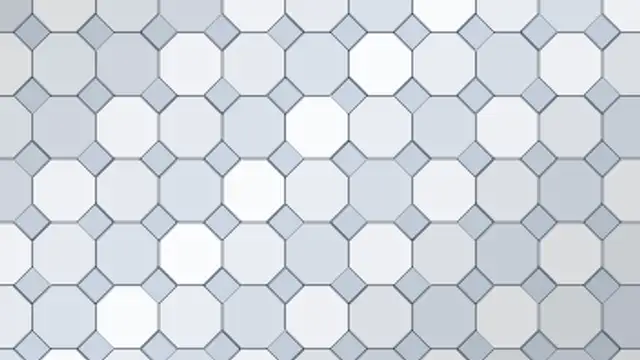
Regular octagons meet edge to edge with a small square dropped into every corner gap, the old bathroom floor laid down tile by tile.

The single thirteen-sided tile that covers the plane without ever repeating, grown by its own substitution rules, with every mirrored hat picked out in the accent.
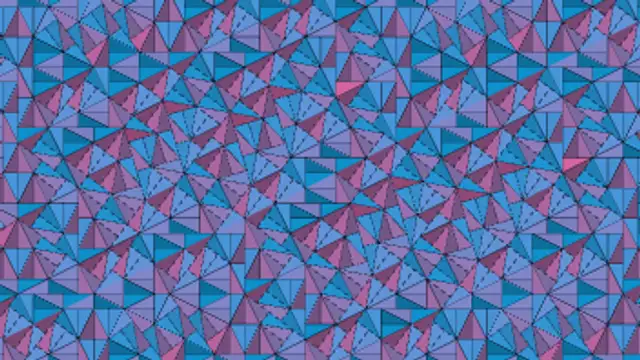
Conway's right triangle splits into five smaller copies over and over, and because each turn is an irrational angle no two levels ever line up again.
Pick a tessellation preset, set the density and seed, choose two or three colors, then export a seamless loop. The pattern is generated from real geometry each frame, so changing the seed gives a genuinely different tiling rather than a shifted copy of the same one.
Grids and checkerboards are one effect away in any editor. Truchet tiles, Voronoi cells, Delaunay meshes and aperiodic tilings are not: they need algorithms the timeline cannot express. These presets generate the geometry, so you get a pattern rather than a filter.
Read the full guide: How to Make a Seamless Tile Pattern Background Video42 editable presets, including Truchet Tiles, Moire Grid, Recursive Split, Circle Packing, Weave Lattice and Delaunay Mesh. Every one opens in the browser editor, where you change colors, timing and any text before you download.
All 42 loop seamlessly, so you can repeat any of them on your timeline for as long as the shot needs.
MP4 for any editor or platform, WebM with a transparent background for the web, and a PNG sequence with alpha for Premiere Pro, After Effects, DaVinci Resolve and Figma. Every preset exports in 16:9, 9:16, 1:1 and 4:5 from 720p up to 8K, with a commercial license in your name.
Editing and previewing are free. You only spend a credit when the finished file lands on your machine.
5 free HD downloads on a new account · No card required