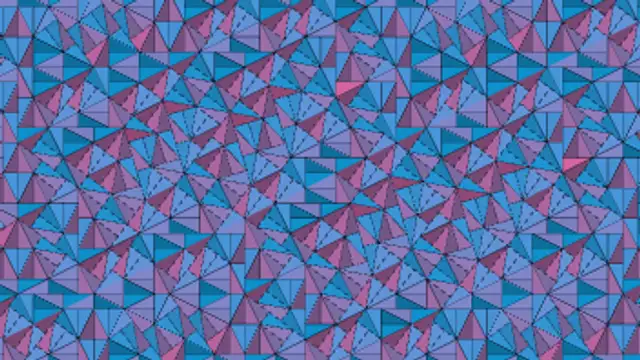
Conway's right triangle splits into five smaller copies over and over, and because each turn is an irrational angle no two levels ever line up again.
Pythagorean Tiling
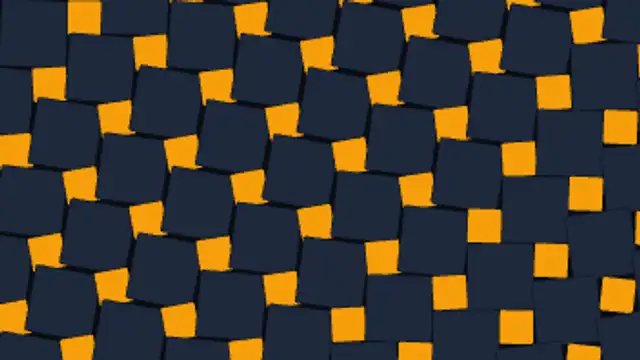
Two sizes of square lock together in the old pinwheel proof, and every tile turns a little against its neighbour without the fit ever breaking.
Lock two sizes of square into the classic pinwheel tiling and turn each against its neighbour. Edit square sizes, spin and palette.
Part of Tessellation Backgrounds. New to this kind of graphic? Read How to Make a Seamless Tile Pattern Background Video.
Transparent exports and editor imports are explained in the transparent video guide, and every download is free under the commercial license.
Style: background, primary, secondary, accent and thickness. Layout: aspect ratio and corner radius. Motion: duration, density, variation and speed.
Pythagorean Tiling runs 12 seconds by default, and you can set any length up to 60 seconds before you export. It loops seamlessly.
Pythagorean Tiling is at home in geometry lessons, maths channel intros and architecture or paving showcases. Two square sizes locked in a pinwheel carry a classroom story, and the small turning motion keeps a proof title or formula card from sitting on a static plate.
Conway's right triangle splits into five smaller copies over and over, and because each turn is an irrational angle no two levels ever line up again.
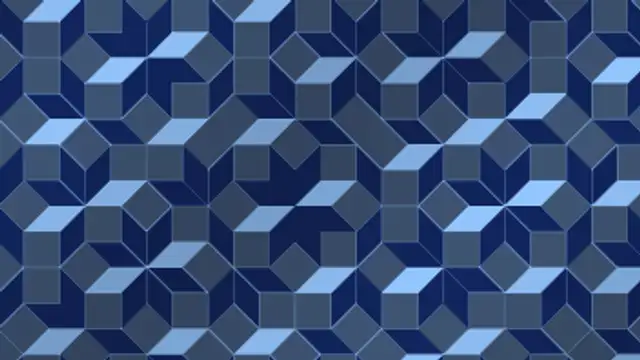
Four line grids at even angles are cut into squares and thin rhombs, giving an eight-fold tiling that never repeats however far it runs.
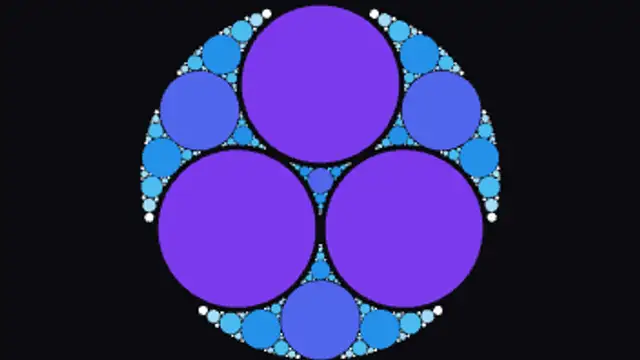
Every gap between three touching circles is filled by the one circle that touches all three, over and over, until the whole disc is packed to the grain.
Overlapping shell fans lie in offset courses with rays struck across each one, and a diagonal wave lifts them course by course like a gilded ceiling.
A seeded board runs the neighbour rules forward generation by generation, then plays the whole run backwards so the loop closes exactly.
Two families of cord cross the frame on the diagonal, alternating course by course so one set rides over the other the way knotwork is drawn.
Rings spread from the middle of a checkerboard and every square they reach turns edge-on and comes back the other colour, like a wall of flip-dots.

Circles drop in at every size that will still fit without touching, filling the frame, then each one pulses gently against its neighbours.