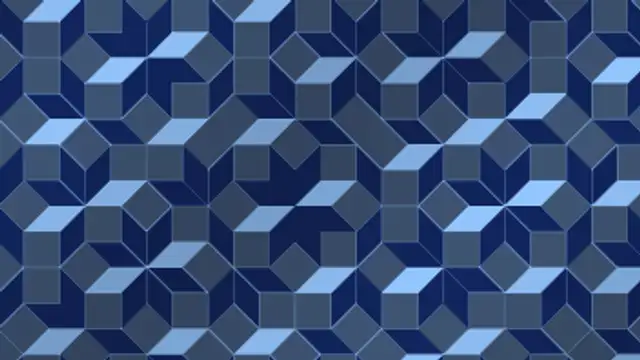
Four line grids at even angles are cut into squares and thin rhombs, giving an eight-fold tiling that never repeats however far it runs.
Pinwheel Tiling
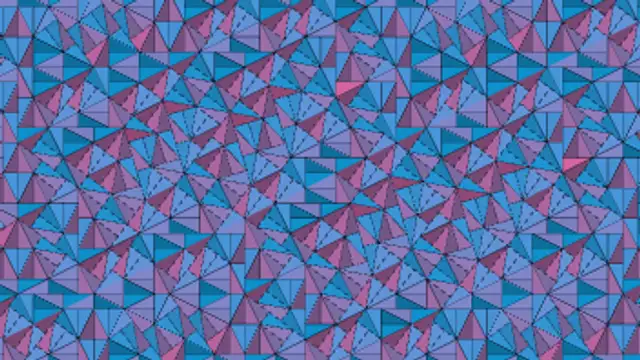
Conway's right triangle splits into five smaller copies over and over, and because each turn is an irrational angle no two levels ever line up again.
Split Conway's pinwheel triangle into five copies again and again, turning by an irrational angle each time. Edit depth, zoom and palette.
Part of Tessellation Backgrounds. New to this kind of graphic? Read How to Make a Seamless Tile Pattern Background Video.
Transparent exports and editor imports are explained in the transparent video guide, and every download is free under the commercial license.
Style: background, primary, secondary, accent and thickness. Layout: aspect ratio. Motion: duration, density, variation and speed.
Pinwheel Tiling runs 15 seconds by default, and you can set any length up to 60 seconds before you export. It loops seamlessly.
Pinwheel Tiling suits architecture school reels, lectures on substitution tilings and angular brand films for studios or galleries. Triangles appear at endlessly many angles, giving a shattered, faceted energy that works behind bold sans serif titles.
Four line grids at even angles are cut into squares and thin rhombs, giving an eight-fold tiling that never repeats however far it runs.
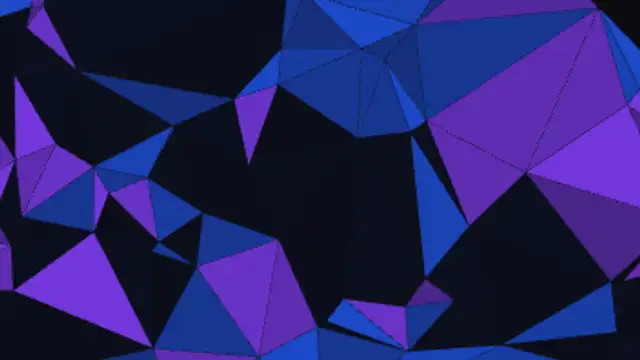
Points drift on slow orbits and the frame retriangulates around them every frame, so the whole low-poly mesh keeps rebuilding itself.
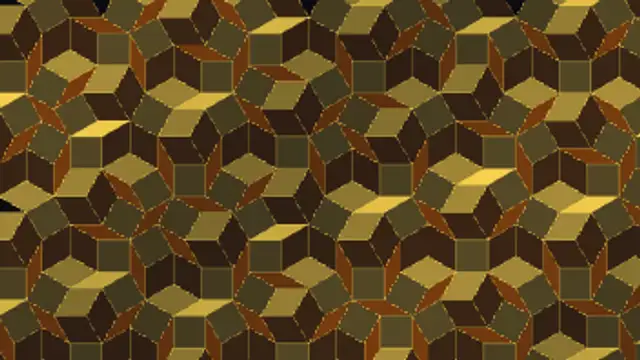
Six line grids meet at thirty degrees and their cells fall out as three rhombus shapes, building the twelve-fold rosettes of a dodecagonal quasicrystal.

The single thirteen-sided tile that covers the plane without ever repeating, grown by its own substitution rules, with every mirrored hat picked out in the accent.
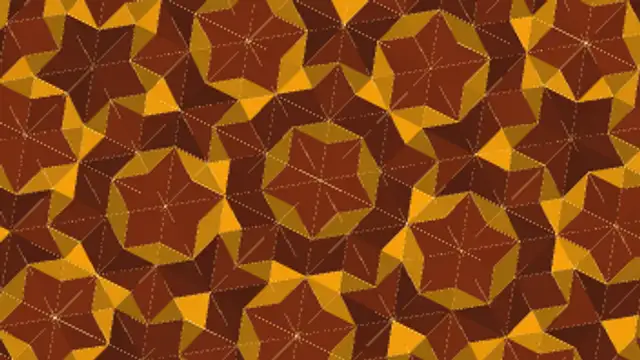
Thin and thick rhombs subdivide at the golden ratio into a pattern that never repeats, then breathe in slow waves across the tiling.
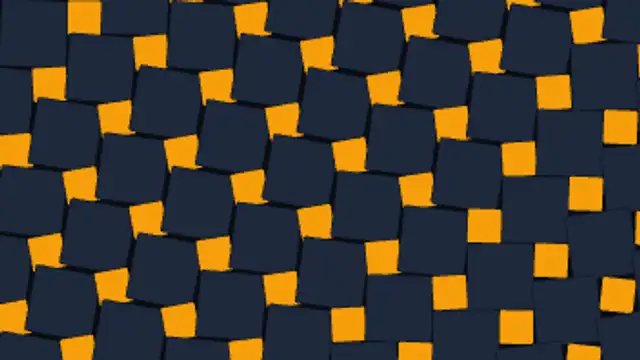
Two sizes of square lock together in the old pinwheel proof, and every tile turns a little against its neighbour without the fit ever breaking.
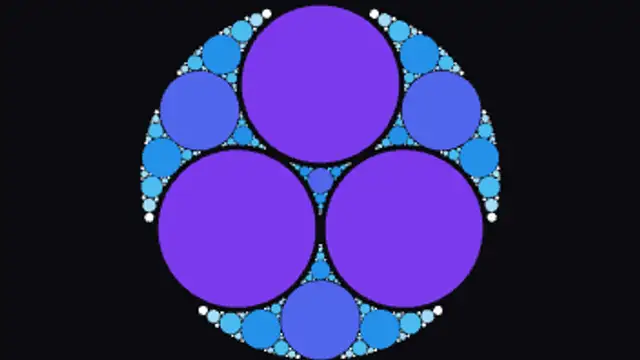
Every gap between three touching circles is filled by the one circle that touches all three, over and over, until the whole disc is packed to the grain.
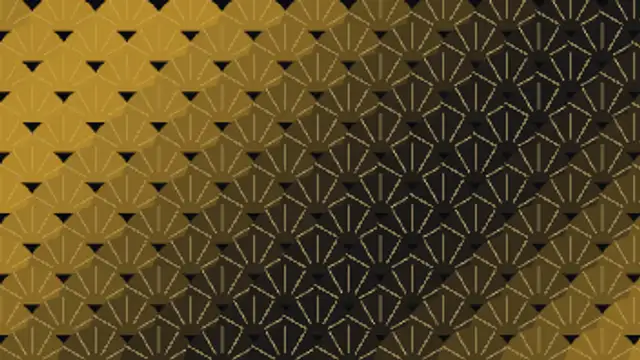
Overlapping shell fans lie in offset courses with rays struck across each one, and a diagonal wave lifts them course by course like a gilded ceiling.