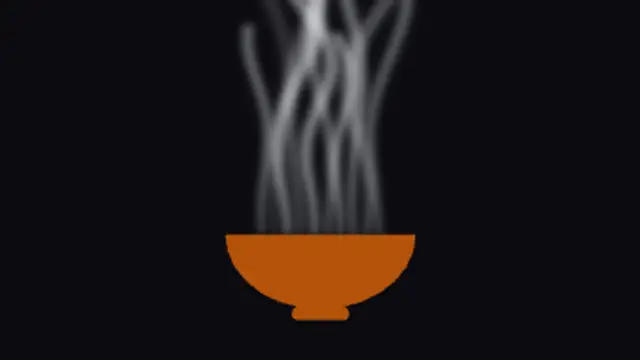
A wide bowl breathes slow, heavy steam that leans and thins as it climbs, built for soups, ramen and anything served hot.
Steam Curl Rise
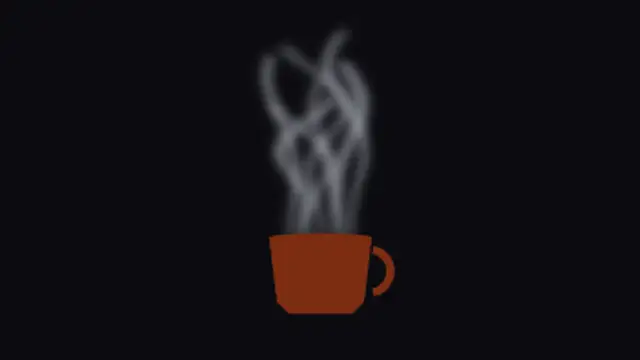
Ribbons of steam lift off the rim, each seeded with its own sway, width and travel so no two curls ever repeat the same shape.
Loop rising steam off a cup, bowl or pan with seeded sway and drift. Edit vessel, colours, reach and speed, then export for menus and food reels.
Part of Food & Drink. New to this kind of graphic? Read How to Add Animated Steam and Recipe Cards to Food Videos.
Transparent exports and editor imports are explained in the transparent video guide, and every download is free under the commercial license.
Style: background, primary, secondary and accent. Layout: aspect ratio, scale and position. Motion: duration, speed, intensity and variation.
Steam Curl Rise runs 8 seconds by default, and you can set any length up to 30 seconds before you export. It loops seamlessly.
Steam Curl Rise brings a still product photo of coffee or tea to life on a cafe menu screen, and it rescues b-roll where the drink had already cooled by the time the camera rolled. Since it loops, a single export can run under a whole morning-routine sequence.
A wide bowl breathes slow, heavy steam that leans and thins as it climbs, built for soups, ramen and anything served hot.

A tight dark stream drops straight into a short glass, building crema at the surface as the level rises and steadies.

Carbonation climbs the frame, each bubble seeded to its own size, wander and speed, swelling slightly as it nears the top.
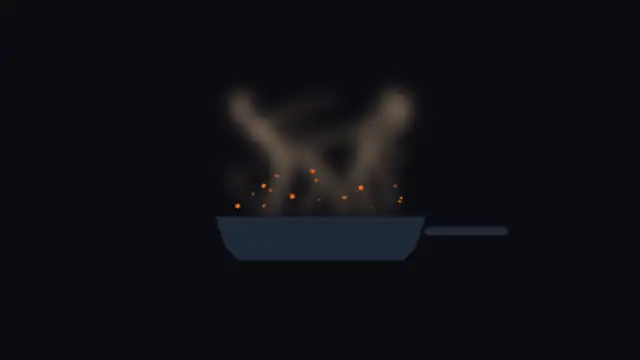
Heat wavers off a hot pan while oil sparks pop and fade above it, every spark seeded to its own height and beat.

Flakes of seasoning tumble down and slow as they land, each one turning on its own axis so the dusting never looks stamped.

Twin jets of outlined vapour blast sideways and curl upward, swelling and thinning as they go. The classic boiling-mad loop.
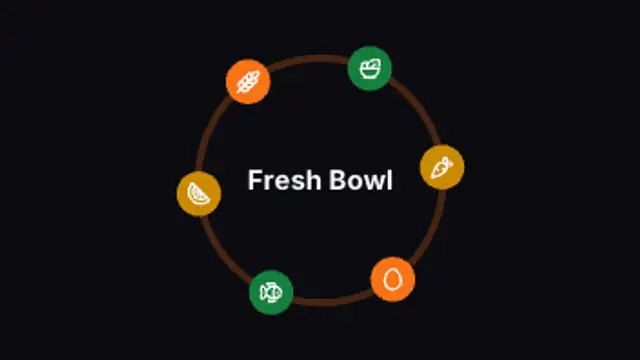
Ingredient icons swing out from the centre and settle evenly around a ring, each arriving on its own beat with a soft overshoot.
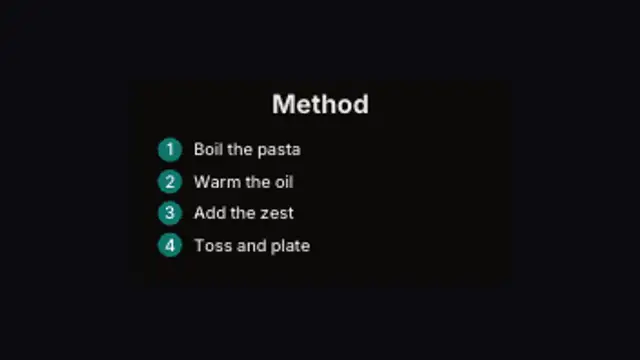
Method steps stack in one at a time, each numbered in its own disc, so a long instruction reflows instead of running off the card.