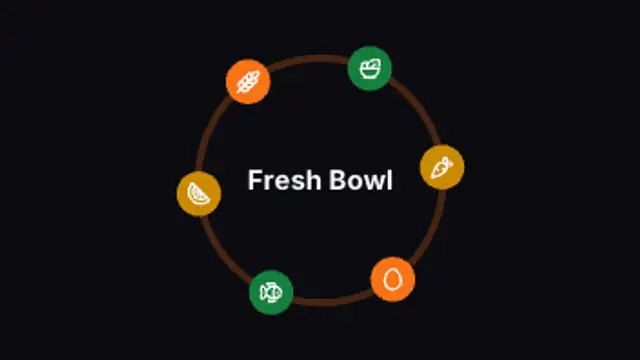
Ingredient icons swing out from the centre and settle evenly around a ring, each arriving on its own beat with a soft overshoot.
Recipe Card Build
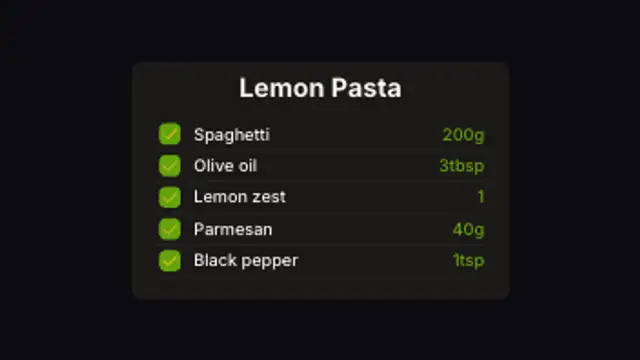
The card sizes itself to however many ingredients you type, then ticks each row in with its own check as the list assembles.
Build an animated recipe card that lays itself out around your own ingredients and amounts, ticking in one row at a time.
Part of Food & Drink. New to this kind of graphic? Read How to Add Animated Steam and Recipe Cards to Food Videos.
Transparent exports and editor imports are explained in the transparent video guide, and every download is free under the commercial license.
Content: title, labels, values and units. Typography: font, weight and size. Style: background, text color, primary, secondary and accent. Layout: aspect ratio and corner radius. Motion: duration and easing.
Recipe Card Build runs 6 seconds by default, and you can set any length up to 30 seconds before you export. It plays once.
Recipe Card Build belongs right after the finished dish shot in a cooking video, when viewers want the shopping list. It also serves as a pinned end card they can screenshot, because the list lays out every amount in one frame.
Ingredient icons swing out from the centre and settle evenly around a ring, each arriving on its own beat with a soft overshoot.
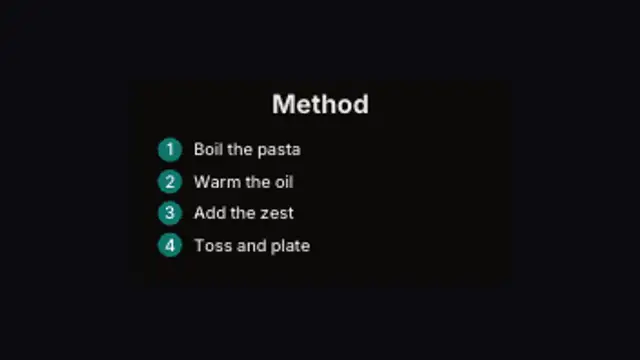
Method steps stack in one at a time, each numbered in its own disc, so a long instruction reflows instead of running off the card.
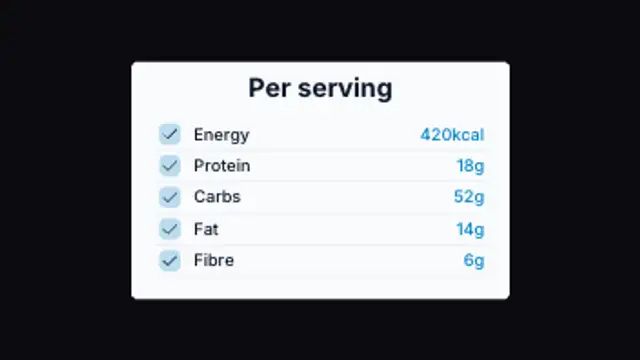
Nutrition rows count in against their own units and rule off as they land, sized to whatever set of values you enter.
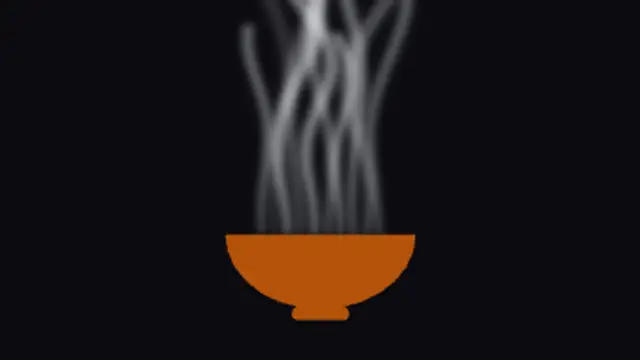
A wide bowl breathes slow, heavy steam that leans and thins as it climbs, built for soups, ramen and anything served hot.
A tight dark stream drops straight into a short glass, building crema at the surface as the level rises and steadies.

Carbonation climbs the frame, each bubble seeded to its own size, wander and speed, swelling slightly as it nears the top.

A stream arcs into the glass and the level climbs behind it, then the surface rocks and settles the way a real pour does.

A thick ribbon of sauce draws itself across the plate in one unbroken pass, thinning at the ends and dropping beads as it goes.