
Every edge sprouts a smaller spike on every pass, and the outline draws itself around until the snowflake closes on its own start.
Dragon Curve Fold
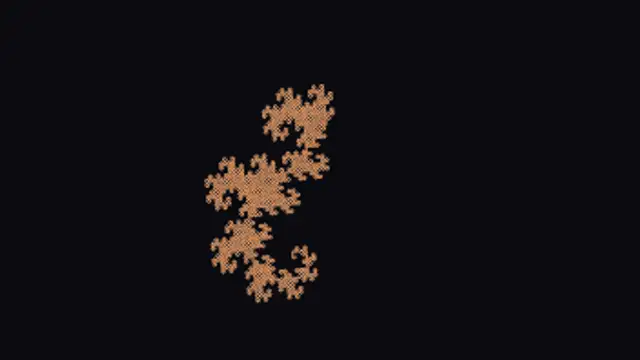
One strip folded in half over and over, never crossing itself, tiling the plane into a shape that looks designed but is only folding.
Draw the dragon curve as one continuous folded strip that never crosses itself. Edit fold depth, colours, spin and draw speed.
Part of Curve & Field Backgrounds. New to this kind of graphic? Read How to Animate Spirograph and Math Curve Backgrounds.
Transparent exports and editor imports are explained in the transparent video guide, and every download is free under the commercial license.
Style: background, primary, secondary, accent and thickness. Layout: aspect ratio, count and rotation. Motion: duration, density, variation and speed.
Dragon Curve Fold runs 12 seconds by default, and you can set any length up to 60 seconds before you export. It loops seamlessly.
Dragon Curve Fold suits paper folding and origami channels, computer science lessons on recursion, fantasy map style titles and puzzle brand idents. One strip that never crosses itself yet fills a dragon-like shape rewards viewers who watch the whole draw.
Every edge sprouts a smaller spike on every pass, and the outline draws itself around until the snowflake closes on its own start.
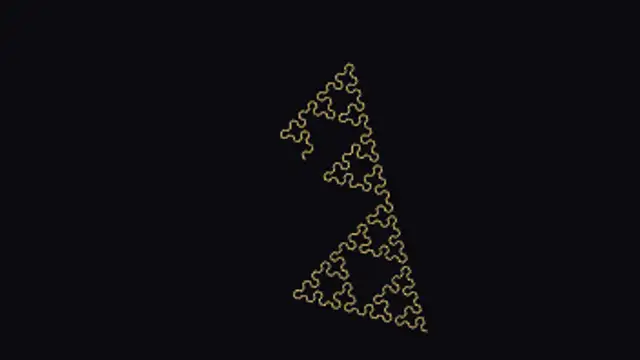
One continuous path that never lifts or crosses, yet the triangle-inside-a-triangle of Sierpinski appears as the line finishes.
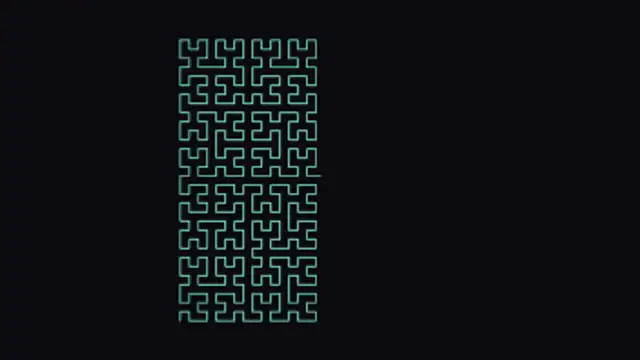
A single unbroken line finds its way through every cell of the grid exactly once, and you watch it fill the square as it goes.
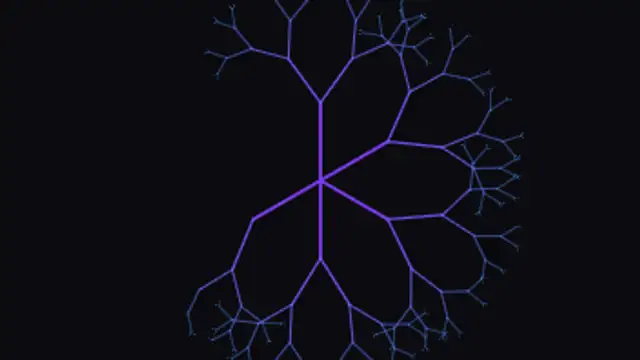
Six trunks leave the centre at once and branch outward together, so the frame fills from the middle in a single symmetrical burst.
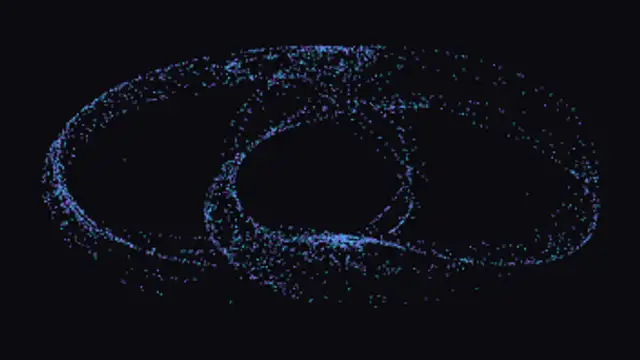
A two line iterated map is run tens of thousands of times and the points pile up into a fractal cloud that never quite crosses its own path.
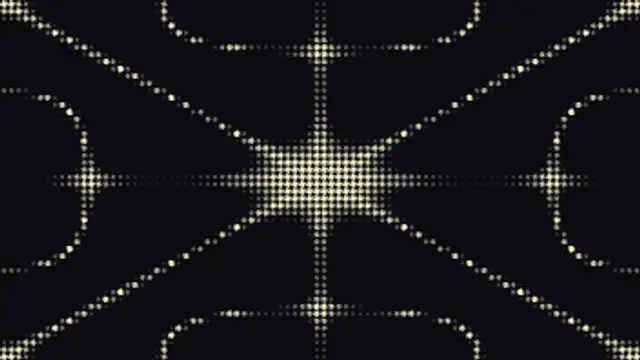
Sand settles along the still lines of a vibrating plate, and as the driving mode swings through zero the whole nodal figure inverts and reforms.
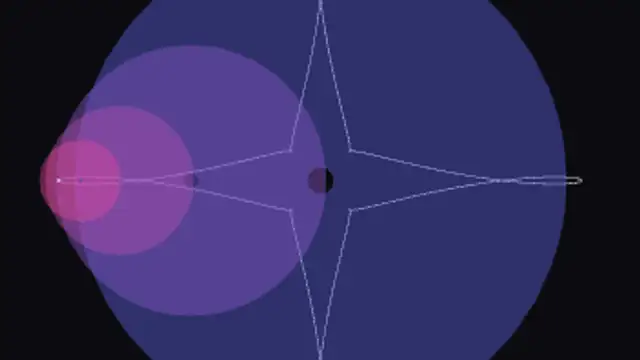
A chain of circles each turn on the rim of the one before, and the pen at the end of the chain traces the closed figure their speeds add up to.
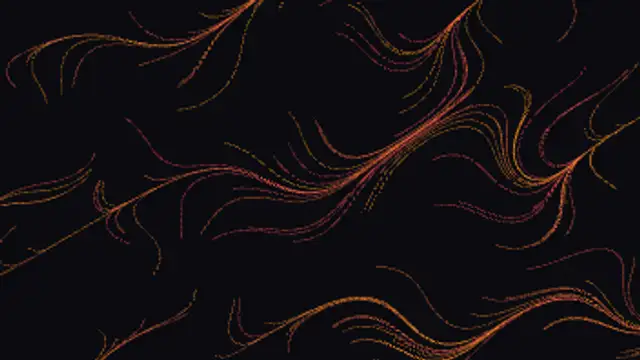
Every point in the frame is given a direction by a drifting noise field, and hundreds of short streamlines follow whatever direction they land on.