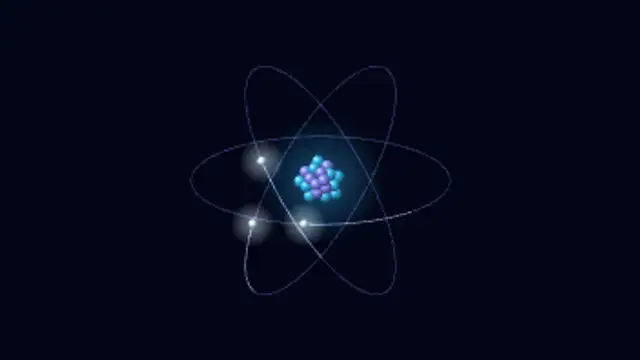
Atom Orbit
10sElectrons with glowing trails circle a shimmering nucleus on tilted orbits, a classic science symbol in a perfect loop.
Molecule Spin
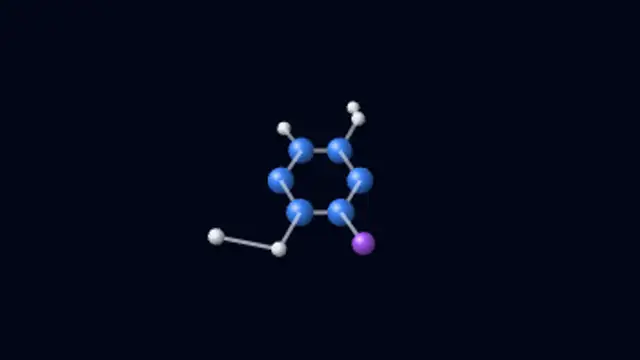
A ball-and-stick molecule turns in 3D with depth and perspective, ideal for chemistry, pharma and research visuals.
Part of Science & Medical. New to this kind of graphic? Read How to Animate DNA and Cells for a Science Video.
A ball-and-stick molecule turns in 3D with depth and perspective, ideal for chemistry, pharma and research visuals. It belongs to the Science & Medical category on velements, where you edit it in the browser and download it as a finished video file.
Every control in the editor, grouped the same way there. Style: background, primary, secondary, accent and thickness. Layout: aspect ratio, scale and position. Motion: duration, variation and speed. Each change appears in the live preview straight away, and editing is free.
Molecule Spin runs 10 seconds by default, and you can set any length up to 60 seconds before you export. It plays once from start to finish, so it drops straight onto a cut or an opening.
Yes. Set the background to Transparent, then export a PNG sequence for Premiere Pro, After Effects, DaVinci Resolve, Final Cut Pro or Figma: import the first frame as an image sequence and it drops onto a track above your footage with a straight alpha channel. Export WebM with a VP9 alpha channel for the web and for CapCut. MP4 has no alpha channel, so it keeps a solid color or image behind the animation.
Yes. Each download comes with a perpetual commercial license in your name for client work, ads and products, and you may sell the edited clip on stock footage sites. Reselling the preset itself as an editable template is not allowed.
Electrons with glowing trails circle a shimmering nucleus on tilted orbits, a classic science symbol in a perfect loop.
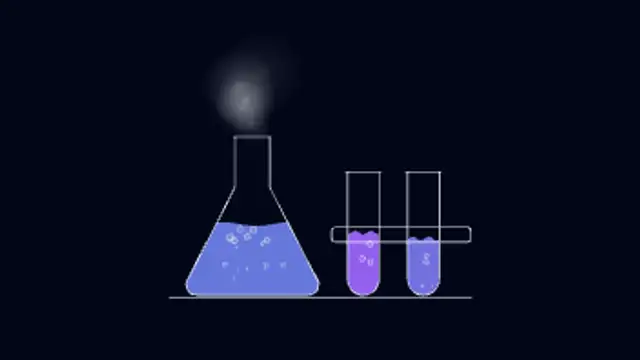
Line-art flask and test tubes bubble away as their liquids shift color in a reaction, with wisps of vapor rising from the neck.
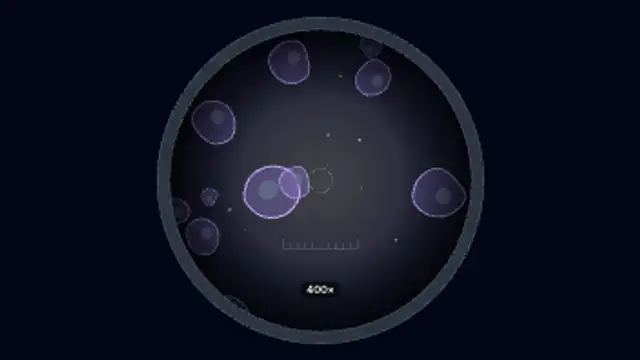
Look down a microscope lens with a reticle and scale bar as drifting cells slowly zoom in and snap into focus, with an editable magnification tag.
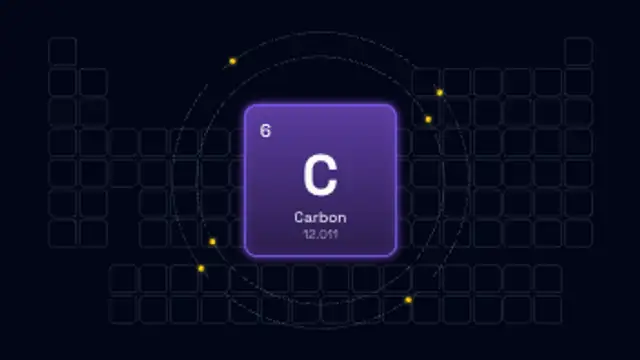
A light sweep crosses the periodic table, then your element's tile flips out of its real cell into a title card ringed by orbiting electron shells.
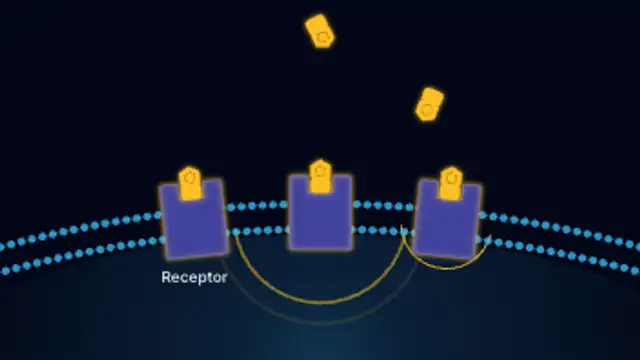
Drug molecules drift toward a cell membrane and lock into receptor pockets one by one, each binding sending a signal ripple into the cell.
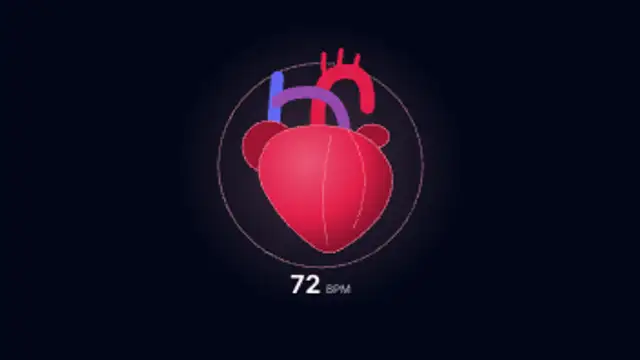
A stylised anatomical heart with aorta and vessels pumps in a lub-dub double beat, sending glow rings out with a live BPM readout.
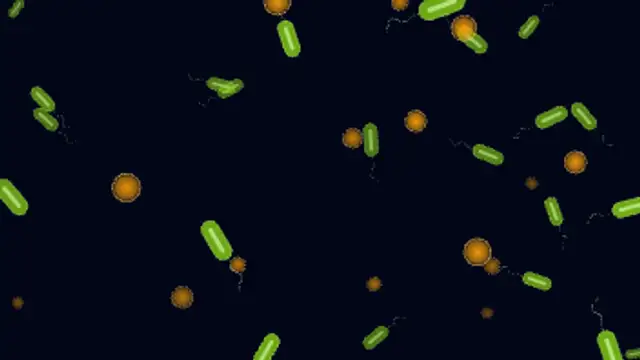
Rod-shaped and round microbes wander at different depths with wiggling flagella and soft focus, in a seamless microscopic loop.
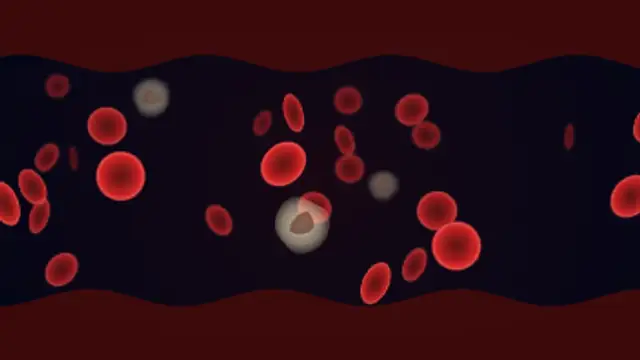
Red blood cells tumble through a vessel with depth parallax and soft focus, joined by a few white cells, in a perfect loop.